Resume Science Hub: From Proof to Interviews
What to do next
- Fix the basics: filetype (PDF), simple layout, standard headings, no tables/columns for core text.
- Quantify impact: action verb + what you did + measurable result.
- Tailor once: pick 1-2 roles, extract keywords, reflect them naturally-don't stuff.
- Scan with our Honest ATS checker, then fix the top 3 issues.
- Add a 2-line 'Wins' section showcasing outcomes, not tasks.
Try this next week: Rewrite one resume bullet with an action verb + measurable outcome.
Resumes that win interviews aren't longer-they're sharper. Here's a practical system to turn experience into evidence, optimize for quick scans and ATS, and make your story interview-ready.
Related: What Is an ATS Score & Why It Doesn't Tell the Whole Story · Mid-Career Resume Mistakes (and Fixes)
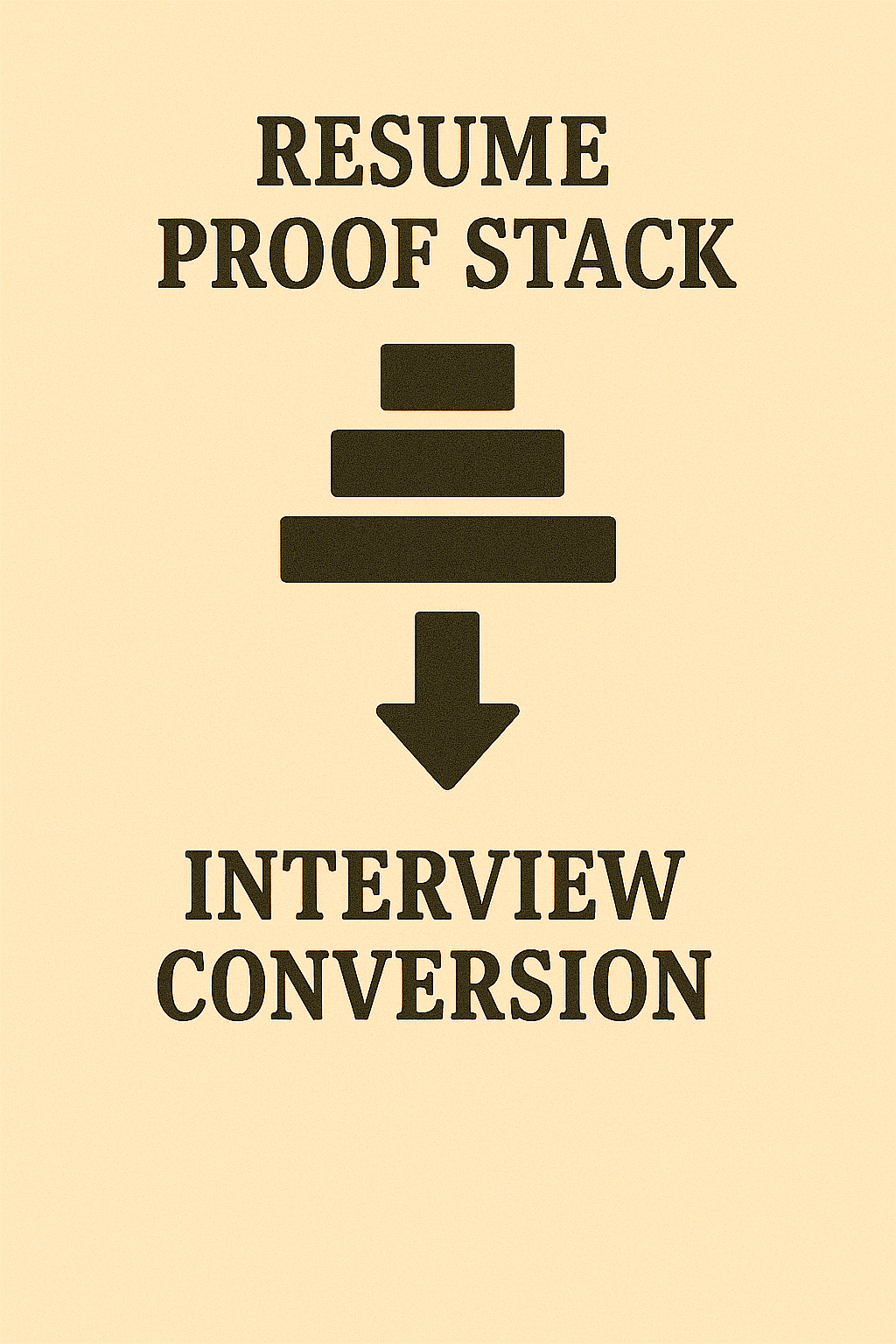
The Proof Stack (why your bullets work or don't)
Outcome = measurable result · Mechanism = lever you pulled · Scale = size/speed/scope · Relevance = why it matters to the target role.
Build proof first, then format. If you don't have numbers, use directional change (≈, →, −/+) or proxy metrics.
PEER Method for Bullets
PEER = Problem → Evidence → Effect → Relevance. One bullet, one outcome. Keep verbs concrete and nouns specific.
- Problem: "handoffs caused delays"
- Evidence: "implemented RACI + 2-step QA"
- Effect: "cycle time −32%, defects −18%"
- Relevance: "supports scaled launches for B2B SaaS"
Turn 6-8 of your best bullets into a story arc. Then validate phrasing with the Check what story your resume tells.
Credibility Markers You Can Add This Week
- Named stakeholders (e.g., "partnered with Sales Ops & CS leadership")
- Scale anchors (ARR band, DAUs, team size, region count)
- Lifecycle scope (owned discovery→delivery or E2E process)
- External proof (case study, portfolio, public talk, patent)
- Constraints (legacy stack, compliance, budget cap)
- Repeatability (frameworks/playbooks you created)
- Peer quotes or micro-testimonials (one line, role + initials)
Returning after a break? Lead with outcomes from recent micro-projects or volunteer builds. See Women Returning to Work.
Scannability: Write for 8-second eyes
Make it effortless
- 12-11pt modern font, consistent spacing
- Max 2 lines per bullet, 4-6 bullets per role
- Role-first headings: Company - Role - Dates - Location
- Whitespace is a feature, not a bug
Kill friction
- No dense paragraphs, no jargon salad
- Avoid decorative icons/tables that break parsing
- One link that matters: portfolio or proof hub
Why ATS still matters (but not most): ATS score explained.
ATS Alignment (without writing for robots)
Map intent terms, not just keywords. Pull 5-7 target JDs and look for recurring skills + outcomes. Mirror the language where true.
- Title alignment (e.g., "Product Operations" vs "Program Manager")
- Skill clusters (e.g., lifecycle analytics, CX, GTM enablement)
- Outcome phrases ("reduced churn," "accelerated releases," "quality gates")
Run a first pass with Check what story your resume tells, then strengthen proof and readability. Passing filters is step one; interviews come from relevance + proof.
Examples: Before → After
Need more inspiration? See How WisGrowth Checks Career Decisions for outcome-first storytelling.
From Resume to Interview: The Conversion Loop
Your resume is a hook, not a biography. Close the loop with micro-assets:
- One-pager with 3 proofs (graphs/screenshots ok)
- Case note (problem → approach → outcome → lesson)
- Talk track (60-sec story for each top bullet)
Laid off recently? Calibrate your story first, not just your format. Start here: Laid Off in Tech-Your Opportunity.
Ship a Proof-Ready Resume Today
Scan, fix, and strengthen your outcomes with WisGrowth. Then use our prompts to turn bullets into interviews.
Start my Resume Story CheckUnsure of your direction? Start with the Career Decision first read or explore How WisGrowth Checks Career Decisions.