The Resume You're Sending Might Be Killing Your Chances - Here's Why
What to do next
- Fix the basics: filetype (PDF), simple layout, standard headings, no tables/columns for core text.
- Quantify impact: action verb + what you did + measurable result.
- Tailor once: pick 1-2 roles, extract keywords, reflect them naturally-don't stuff.
- Scan with our Honest ATS checker, then fix the top 3 issues.
- Add a 2-line 'Wins' section showcasing outcomes, not tasks.
Try this next week: Rewrite one resume bullet with an action verb + measurable outcome.
Mid-career resumes need more than updates-they need a narrative shift from tasks to outcomes. Here's how to rewrite yours.
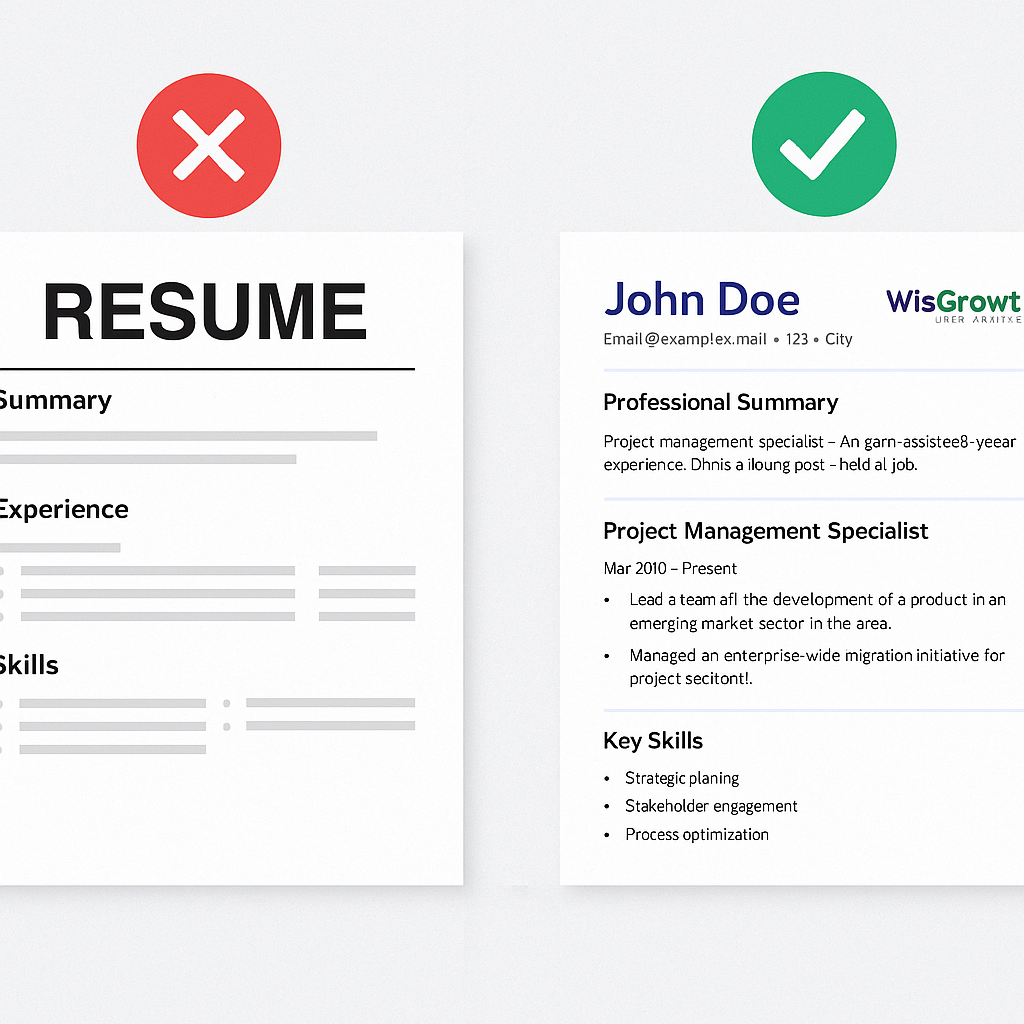
Top Mistakes Mid-Career Candidates Make
- Duty lists instead of outcome-driven achievements
- Dense layouts, tiny fonts, or dated typefaces
- No numbers, scope, or business impact
- Roles listed without an overarching narrative
- Everything since college-no prioritization for relevance
The Achievement Bullet Formula
Use this template to convert tasks into proof:
[Action Verb] + [What You Built/Led/Improved] + [How (tools, team, scope)] + [Outcome (metric, time, quality, cost, risk)]
Example: "Scaled a 3→12 person dev team and introduced CI, cutting release time by ~35% across two product lines."
Before → After: Real Rewrites
Before:
- Managed product lifecycle across internal teams
- Worked with developers and QA for delivery
- Conducted meetings with stakeholders
After:
- Launched two enterprise platforms in 18 months; user base 0→120k+
- Built cross-functional rituals that cut defect rate ~40% and slashed rework
- Partnered with C-suite to align roadmap to revenue and CX priorities
ATS Hygiene (Without Killing Readability)
- Use standard headings (Experience, Education, Skills). Avoid text in images.
- Keep critical terms in plain text (job titles, tools, certifications).
- Prefer DOCX or a clean PDF exported from DOCX; avoid complex tables/columns.
- Mirror target role language responsibly-don't keyword-stuff.
Age-Proofing for 30s & 40s
- Detail the last 10-12 years; summarize older roles in "Earlier Experience."
- Remove outdated tech and irrelevant early jobs.
- Emphasize current tools, outcomes, and leadership scope.
Positioning: Your 3-Line Value Summary
Open with a tight summary that aligns to the role:
- Line 1: Identity + domain ("Product leader in fintech")
- Line 2: 2-3 signature outcomes ("launched X, reduced Y, scaled Z")
- Line 3: Tools/scope ("owning roadmap, cross-functional teams, $X budget")
Why WisGrowth's Resume Scan Is Different
Most tools hand you a score. We give you a plan.
- Pattern analysis that flags weak bullets and missing outcomes
- Tone, gaps, credibility markers, and target-role alignment
- A short action plan (3 upgrades) to raise response rates
Go beyond keywords. Land conversations that matter.
Your resume is your first proof-of-value.
Get honest feedback, not vanity scores, so the right people call back.
Start my Resume Story CheckPractical checklist
- Pick a role family and write 3 outcome bullets.
- Run an honest ATS baseline and fix parsing issues.
- Ship one tiny work sample this Friday.
- Send 5-8 calibrated messages; track replies.
- Reflect for 15 minutes on Sunday and pick the next smallest step.
How we support your next step
We won't drown you in dashboards. Expect gentle practical prompts, realistic parsing checks, and a clear way to prove value-week after week.
FAQs
Pick one role family, rewrite three bullets with measurable outcomes, run an honest ATS baseline, and send 5-8 calibrated messages weekly.
Lead with outcomes and scope, calibrate comp early, and show currency via proof-of-work. Gaps become narrative bridges when paired with evidence.
Yes-take the free first read and run a free honest ATS baseline.
Sources and references
Sources checked 24 August 2026.
Your resume is more than a document
WisGrowth uses resume signals to understand what your experience currently proves, what it does not prove yet, and which paths may need stronger evidence before you commit.
- Checks parser readability, role keywords, recruiter clarity, and missing evidence.
- Connects resume evidence to the role or move you are considering.
- Gives decision support, not a guarantee of interviews, hiring, salary, or employer outcomes.