ResumeWorded vs WisGrowth - More Than a Score
Scores are signals, not outcomes. Scorecards can catch vague phrasing and missing terms. But interviews follow when your direction is clear, your proof is visible, and your resume is parser-safe. WisGrowth is a Career Decision approach that helps you make those three pieces work together-week after week.
What to do next
- Pick one role family with the Career Decision first read.
- Run an Check what story your resume tells; fix parsing issues first.
- Publish one tiny work sample (case bullet, screenshot, or 3-minute Loom) by Friday.
- Send 5-8 calibrated messages referencing that work sample.
Try this next week: Replace two buzzwords with one metric (%, $, time, risk).
We're building a new category: a lifelong guide for clarity, proof, and calm momentum, not a one-time score.
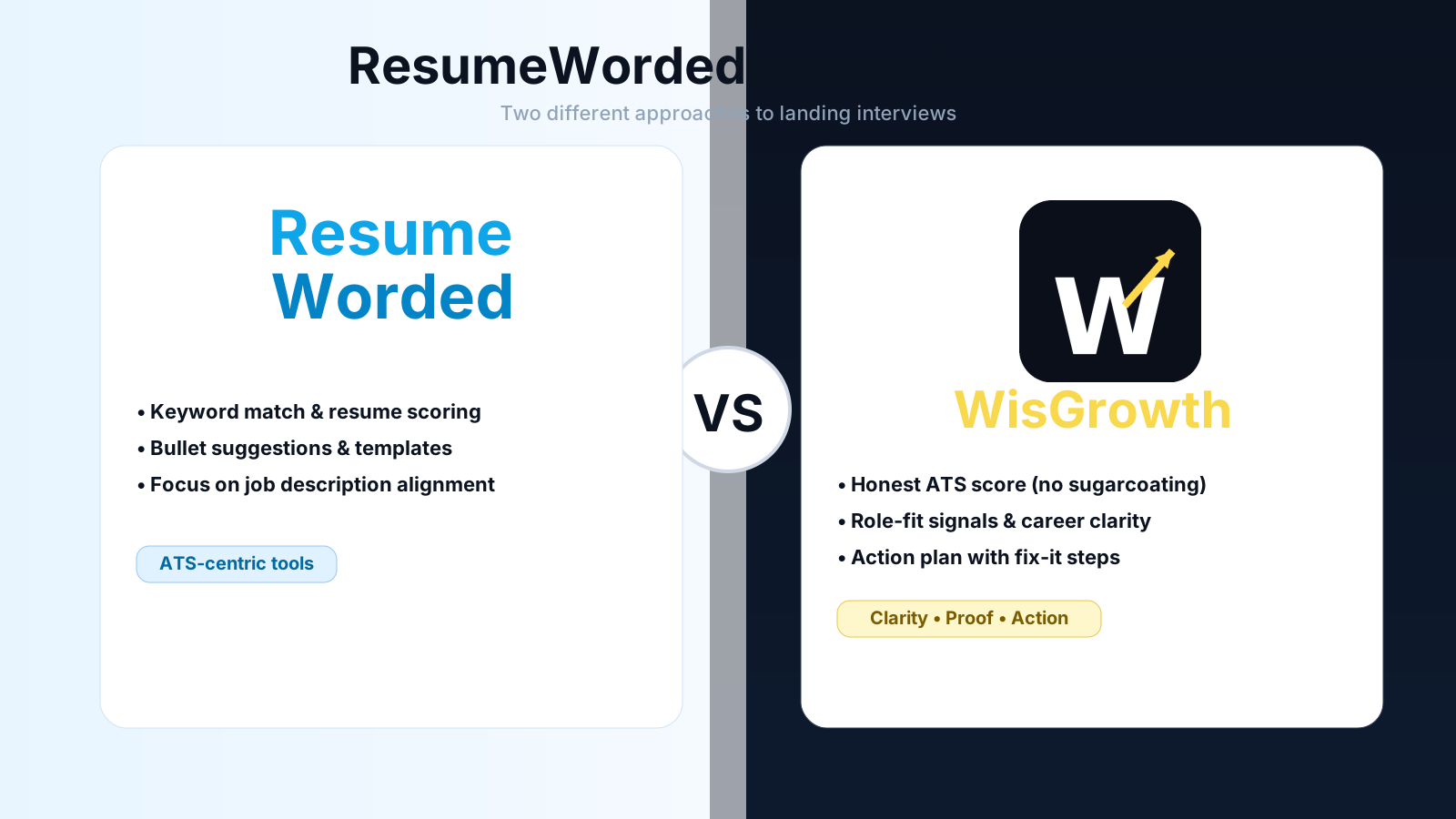
In one line: a useful mirror vs a forward path
ResumeWorded is a helpful mirror for surface-level fixes. WisGrowth adds the forward path: choose a lane, translate your wins into metrics, keep the resume parser-safe, and ship small relevant work samples so your messages convert into interviews.
Where ResumeWorded helps (and we agree)
- Hygiene checks: catches vague verbs and missing keywords.
- Beginner momentum: a score can nudge you to start iterating.
- Content cues: suggests phrasing that reads cleaner.
These are useful, especially for early drafts. The gap is conversion: turning a tidy document into replies and interviews.
Where score-first tools fall short
- No role-family context: you can optimize for the wrong audience.
- Outcomes under-weighted: recruiters skim for evidence, not adjectives.
- Layout risk: fancy templates can break parsing without you noticing.
- No cadence: without small weekly goals, edits don't compound into opportunities.
Comparison at a glance
| Dimension | ResumeWorded (Scorecard-first) | WisGrowth (Career Decision Guide) |
|---|---|---|
| Primary goal | Raise resume score | Raise job-readiness & conversion |
| Direction | Generic optimization | Role-family targeting and language |
| Proof of work | Not central | Ship micro work samples weekly (cases, demos) |
| ATS safety | Indirect | Honest scans + parser-safe formatting checks |
| Cadence & accountability | On-demand edits | Finishable weekly plan + practical prompts |
| Global readiness | English-first tips | Global availability; adapts titles and style |
| Typical outcome | Tidier resume | Calibrated outreach → replies → interviews |
Stories from around the world
- Diego • Mexico City (Sales Ops → RevOps): Great score, few callbacks. We reframed bullets to pipeline health, win-rate lift, and time-to-quote; added a 2-minute dashboard Loom. Replies within a week.
- Amara • Lagos (Admin → Project Coordinator): We mapped to a single role family, quantified cycle time improvements, and published a risk log teardown. First recruiter screen in 10 days.
- Hana • Seoul (QA → SDET): Kept critical keywords but led with coverage %, escaped defects, and CI time saved. Parser-safe layout + micro repo demo → technical interview.
- Lucas • Berlin (Generalist Marketer → Lifecycle): Shifted to retention metrics (D30, LTV), published a focused evidence test post. Outreach felt the same; signal didn't-three warm intros.
From tidy to persuasive: the practical next-step plan
- Week 1 - Clarity: choose one role family; list 6 outcomes you've driven (%, $, time, risk).
- Week 2 - ATS safety: run an Check what story your resume tells; fix headings, reading order, and keyword blind spots.
- Week 3 - Proof: ship one micro work sample (before→after chart, short Loom, repo readme, or 1-page case).
- Week 4 - Outreach: 5-8 calibrated messages/week; each references your work sample and names a relevant problem.
You can still use ResumeWorded for quick line edits along the way-just let evidence lead the story.
Signal scorecard
| Metric | Target | Why it matters |
|---|---|---|
| Shipped work samples | 1 / week | Public proof beats private potential. |
| Resume re-scans | After each edit | Parser issues cause silent rejections. |
| Meaningful outreach | 5-8 msgs + 2 follow-ups | Quality conversations create options. |
| Practice blocks | 4 × 45 min/week | Short, focused reps move visible metrics. |
| Sunday review | 15 min | Choose next week's smallest useful step. |
Use both-wisely
Draft lines with ResumeWorded. Make them land with WisGrowth: Start a Career Decision → Check what story your resume tells → weekly work samples. For broader context, see Jobscan vs this checkpoint, LinkedIn AI Coach vs this checkpoint, and the Check what story your resume tells.
Start small this week
- Pick one role family (Start a Career Decision).
- Rewrite three bullets with metrics + scope.
- Publish one micro case or demo.
- Run an Check what story your resume tells and apply to three aligned roles.
Calm beats frantic. Small, finished steps compound faster than big, unfinished plans.
Weekly Win
"real examples, anonymised: tiny steps → big momentum."
FAQs
Yes. Use ResumeWorded for quick hygiene checks; use WisGrowth to choose a lane, surface proof, keep the layout ATS-honest, and maintain a practical next step.
The web experience is available online. Resume and hiring expectations still vary by country, so use the relevant local guidance when it applies.
Yes-take the free first read and run a free honest ATS baseline. Choose a deeper report only when you need more detailed evidence and option comparison.
Sources and references
Sources checked 24 August 2026.
Your resume is more than a document
WisGrowth uses resume signals to understand what your experience currently proves, what it does not prove yet, and which paths may need stronger evidence before you commit.
- Checks parser readability, role keywords, recruiter clarity, and missing evidence.
- Connects resume evidence to the role or move you are considering.
- Gives decision support, not a guarantee of interviews, hiring, salary, or employer outcomes.