Jobscan alternative for proof-based resume review
Keywords get you scanned; outcomes get you hired. If you've been tweaking nouns and verbs for a higher score but still getting silence, you're not the problem-the process is. WisGrowth helps you choose realistic target roles, set an honest ATS baseline, and ship small practical evidences so your resume tells a story humans believe.
Start this week
- Shortlist 2-3 role families that fit your strengths and pace.
- Run an ATS-honest scan to catch real parsing issues (headers, dates, columns, PDF quirks).
- Convert one task into a work sample (case note, Loom demo, tiny dashboard) that shows result over rhetoric.
- Tune keywords to match the work sample's outcomes, not the other way around.
- Apply to 3 aligned roles + send 5 warm, specific notes referencing your proof.
Try this: Rewrite one bullet using Problem → Action → Outcome; keep numbers simple and believable.
We're a decision guide, not a dashboard. Momentum with honesty beats a shiny score that nobody trusts.
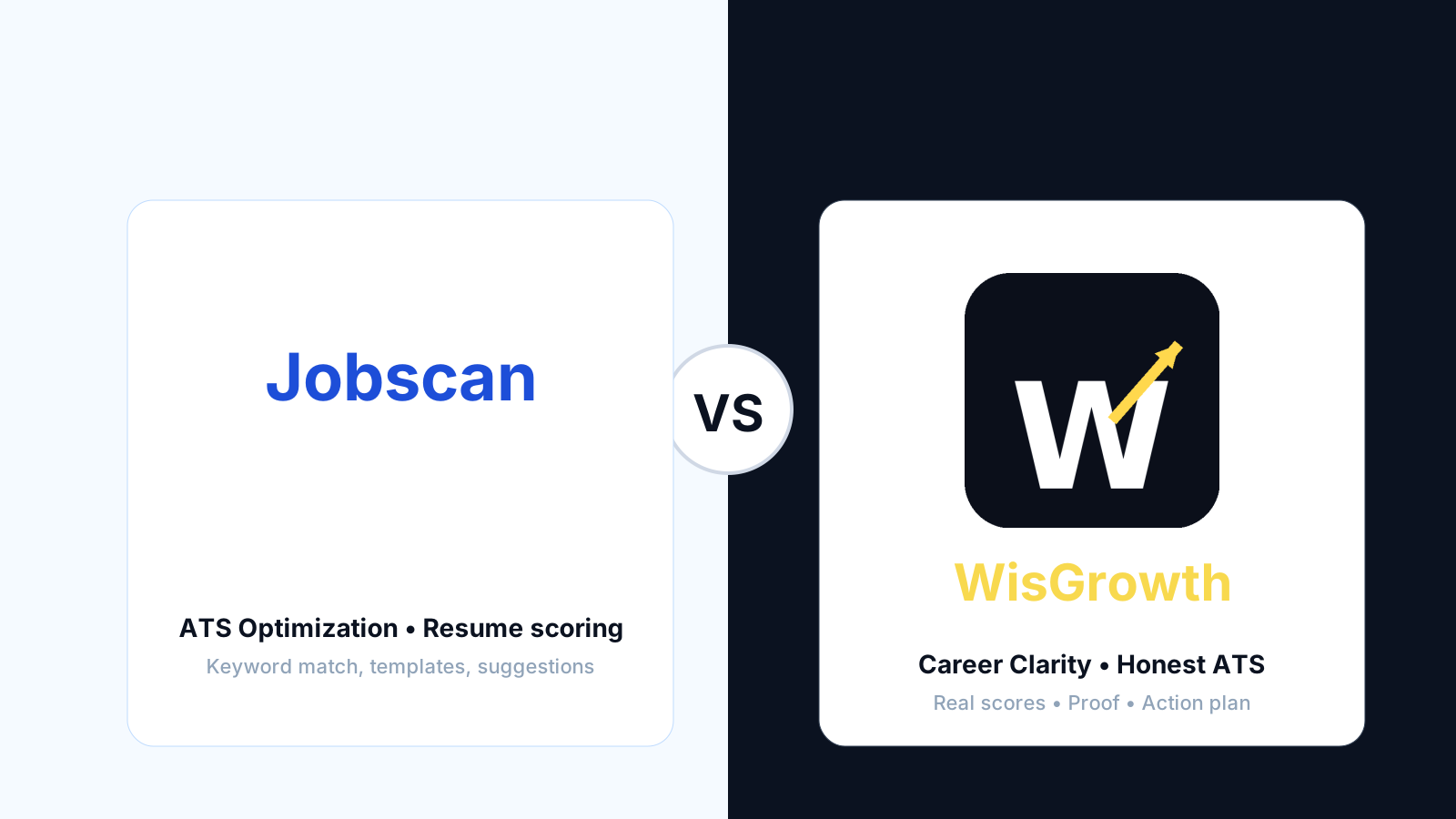
Jobscan or WisGrowth?
Jobscan built its reputation on a clear, narrow job: score how closely your resume's keywords match a specific job description, so you can see what an applicant tracking system might flag as missing. That is a useful, mechanical check once you already know the target role and have a posting in front of you.
WisGrowth starts one step earlier and one step deeper. Most ATS platforms have moved beyond literal keyword counting toward semantic matching that recognizes related terms, so exact-phrase stuffing matters less than it once did. WisGrowth reads whether your resume actually proves you can do the target role, and flags where the story is thin rather than where a word is absent.
Use Jobscan when you have a specific job posting and want a fast keyword-match score against it. Use WisGrowth when you want to know whether your resume actually proves you fit a target role, not just whether it contains the right words. Many job seekers reasonably use both, in that order.
What keyword-matching tools get wrong
They reward text that mentions outcomes, not necessarily work that creates them. It's easy to inflate a score with synonyms and sections that look impressive but break parsing. The result is a resume that reads well to a script, not a human. Real traction begins when your bullets are small case studies, and your layout is parser-safe by default.
What a keyword-match score can and can't tell you
A high keyword-match score tells you your resume contains the language a job description uses. It does not tell you whether a hiring manager would believe the claim behind that keyword, whether the example is specific enough to survive a follow-up question, or whether the role is even right for you. Keyword matching is a filter-clearing tool, not a judgment about whether the underlying evidence holds up.
- A matched keyword still needs a concrete example behind it.
- Match scores don't check whether the story is coherent for the role.
- Two resumes with identical scores can tell very different stories.
- Keyword tools assume you already know the right target role.
Where WisGrowth quietly outperforms
- Evidence over buzzwords: bullets anchored in problem → action → result, not adjective stacks.
- Parser-safe by design: the Honest ATS baseline flags layout traps so your resume actually gets read.
- Continuity: weekly practical prompts + a simple readiness meter keep you moving without burnout.
- Alignment: fewer, better-matched applications backed by work samples people can click.
Where a proof-focused check adds a different layer
WisGrowth's free Resume Story Check reads your resume the way a skeptical hiring manager might: what does this claim actually prove, what's missing, and does the overall document support the specific role you're aiming at. It also checks parsing and ATS readability, so formatting issues don't quietly cost you a matched keyword's value. It's a complementary read, not a replacement for a job-specific keyword pass.
- Flags claims that sound strong but lack visible evidence.
- Checks ATS parsing and formatting readability separately from wording.
- Scores fit against a specific target role, not a generic template.
- Points to the single most useful next revision, not a long list.
Translate tasks into outcomes (steal these patterns)
- Reduced onboarding time by 28% using a checklist + 4 micro-videos; completion +16 pts in 30 days.
- Lifted lead-to-meeting from 14%→22% by routing inbox and adding simple ICP filters.
- Cut support backlog 40% via triage tags and a public FAQ; CSAT +0.4.
Now place one of these as a link under "Projects" or "Selected Work"-a 2-3 minute Loom or a one-pager is enough.
The 7-day cadence (replace score-chasing with signal)
- Choose one role family with the Career Decision first read.
- Rewrite three bullets with measurable outcomes; remove risky formatting (text boxes, multi-column dates).
- Run the Honest ATS scan and fix parsing errors.
- Apply to three aligned roles and send five warm notes that reference your work sample.
Repeat weekly. Calm, compounding steps beat frantic tweaks for a higher number.
Who this is for
Starters, switchers, and relaunchers who want traction without fluff; people who prefer genuine outcomes over vanity metrics.
Who this isn't for
Anyone expecting one-click fixes or guaranteed offers. We trade hype for honest progress.
Common traps, and simple antidotes
- Keyword stuffing: add terms after you've earned them with proof.
- Template overload: keep headings clean, dates consistent, and lists simple.
- Target hopping: commit to one 90-day bet; review monthly.
- Invisible work: publish "good enough" work samples; perfection that nobody sees doesn't help.
Compare: matchers vs proof-first
If you're weighing quick scores against meaningful signal, these deep-dives help:
Before you pick a resume tool
- I know whether I'm optimizing for one posting or a role direction.
- I've checked my resume for both keyword coverage and real proof.
- I've confirmed the file parses cleanly in common ATS formats.
- I have a specific next edit in mind, not just a score to stare at.
Start small. Build proof. Earn trust.
Let your resume show how you create value on purpose. Pick a lane, fix parsing honestly, and publish one tiny proof each week. That's how you turn a scan into a conversation, and a conversation into an offer.
Start my Resume Story CheckClear next step
- Use the page to name the decision, not just collect more advice.
- Look for the missing evidence that would make the next move safer.
- Take one small action now, then review what changed.
FAQs
They can highlight missing terms, but over-optimizing hurts readability and can break parsing. What wins interviews is evidence tied to the target role, not adjective piles.
No. We avoid score inflation.
- Our baseline simulates realistic parsing so fixes convert into real screening gains.
Choose one realistic target role, check ATS readability, strengthen missing evidence, and use focused applications to learn what needs to change.
Yes. Start with a free first read and the Honest ATS baseline.
- Choose a deeper report only when you need more detailed evidence and option comparison.
No. Jobscan's keyword-match scoring against a specific job posting is a different, useful job. WisGrowth focuses on whether your resume's claims are backed by real evidence and fit a target role, and many people use both.
If you're unsure about your target role or whether your experience supports it, start with WisGrowth's Resume Story Check. If you already have a specific posting, run a keyword match against it too.
What to do next
- Fix the biggest parsing or formatting issue first.
- Align the resume to one target role before adding more keywords.
- Recheck the document only after the evidence and structure improve.
Sources and references
Sources checked 24 August 2026.